
At the Microphone
End an Audio Episode with One Clear Next Step
Write an ending that resolves the episode topic and offers one relevant next step without stacking reminders after the listener thinks the programme has finished.

Write an ending that resolves the episode topic and offers one relevant next step without stacking reminders after the listener thinks the programme has finished.

Review a transcript with separate passes for names, meaning and speaker changes, marking unclear audio instead of inventing words.
Give an audio reviewer a clear listening task, version and timestamp format so feedback leads to decisions rather than vague requests to improve everything.
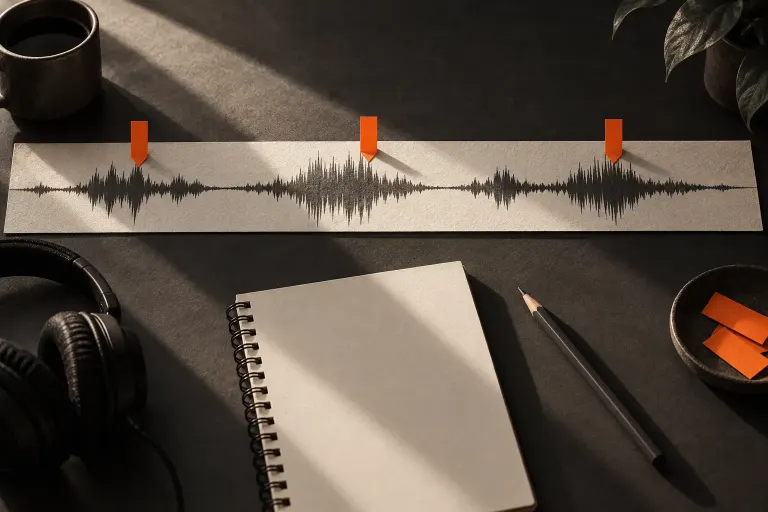
Give tracks and clips concise names that explain their role, source and unresolved checks without relying on colour or memory alone.
Use brief spoken take cues and session notes to identify recording attempts while keeping those cues out of the final published audio.
Revise a short audio script by reading it aloud, shortening difficult phrases and placing useful pauses without flattening your natural speaking style.
Distinguish the intention behind trimming, moving and changing the speed of an audio clip, then check the result in context before continuing.
Understand a spectrogram as a view of frequency content over time, then use it alongside listening without mistaking display colours for fixed quality scores.