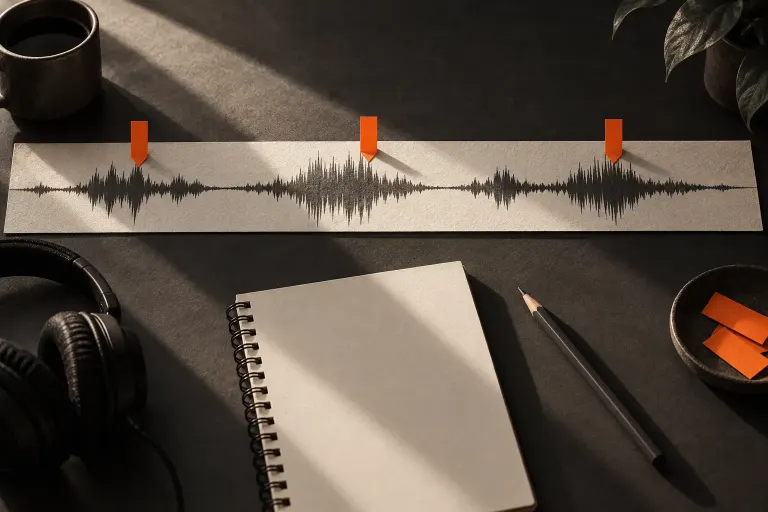
On the Timeline
A Bigger Waveform Does Not Automatically Mean Better Audio
Use a waveform to locate events in a recording while checking scale, zoom and playback before drawing conclusions about loudness or quality.

Use a waveform to locate events in a recording while checking scale, zoom and playback before drawing conclusions about loudness or quality.
Open a spoken-word episode with a concrete question, a reason to listen and a short route into the first useful part.
Build concise show notes around the episode question, meaningful timestamps and checked links, so listeners can return to what matters.
Understand what peak normalisation changes, what it leaves alone, and why listening checks still matter before sharing speech audio.
Shorten a spoken interview while preserving qualifications, sequence and meaning, using a simple comparison with the original answer.
Use a short room survey and a repeatable microphone test to find avoidable noise before recording a spoken-word programme.
The project sounded right, but the export is what another person will hear. Check its format, scope and playback before treating the job as finished.
A good session note tells you what happened and where to return. Use short, descriptive labels to turn a long recording into a more navigable workspace.