On the Timeline
Name Audio Tracks for the Next Person Who Opens the Session
Give tracks and clips concise names that explain their role, source and unresolved checks without relying on colour or memory alone.

Organise recordings, notice useful moments and make editing decisions easier to revisit.
Give tracks and clips concise names that explain their role, source and unresolved checks without relying on colour or memory alone.
Map a long recording into sections and decisions before detailed cuts, keeping the intended listener question and source context visible.
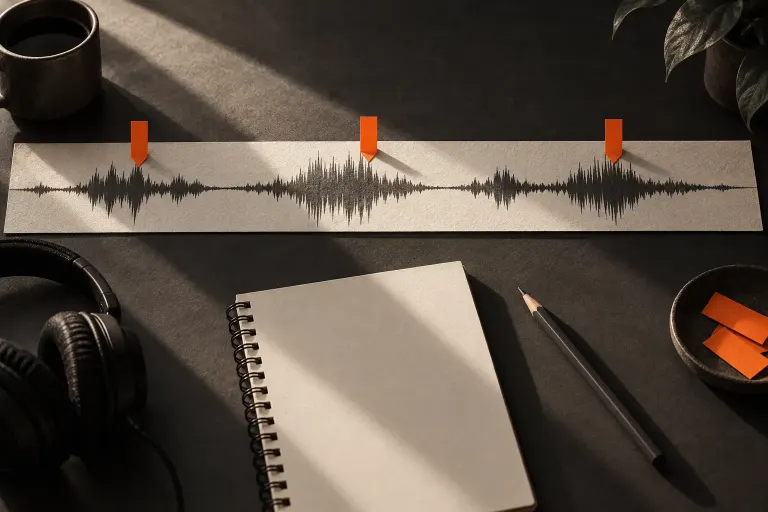
Use a waveform to locate events in a recording while checking scale, zoom and playback before drawing conclusions about loudness or quality.
Understand what peak normalisation changes, what it leaves alone, and why listening checks still matter before sharing speech audio.
Shorten a spoken interview while preserving qualifications, sequence and meaning, using a simple comparison with the original answer.
A good session note tells you what happened and where to return. Use short, descriptive labels to turn a long recording into a more navigable workspace.